Open Banking and APIs: The Universal Connectivity Layer for Agentic Commerce
Open banking and standardized APIs serve as the essential connectivity layer for agentic commerce, enabling autonomous AI agents to access real-time financial data, initiate payments, and orchestrate seamless global transactions beyond legacy banking limitations.

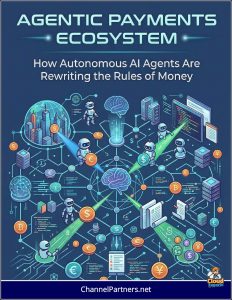 As autonomous AI agents take on roles as buyers, sellers, treasurers, and supply chain coordinators, they require seamless, real-time access to financial accounts, payment systems, and transactional data across institutions worldwide.
Traditional closed banking systems — built on batch files, manual approvals, and proprietary formats — cannot support this machine-speed economy.
Open Banking and standardized APIs are emerging as the universal connectivity layer for Agentic Commerce, enabling agents to securely read balances, initiate payments, analyze cash flows, and orchestrate complex financial workflows without human intervention.
The Core of the Connectivity Layer
Open Banking is a regulatory and technological framework that mandates or enables banks to expose their customer data and payment services through secure, standardized APIs when authorized by the account holder. Pioneered by regulations such as Europe’s PSD2 and the UK’s Open Banking Implementation Entity, it is now expanding rapidly across Asia, Latin America, Australia, and parts of North America.
APIs (Application Programming Interfaces) serve as the technical plumbing — secure, documented gateways that allow different software systems to communicate in real time. In finance, this includes account information APIs, payment initiation APIs, funds confirmation APIs, and advanced services like variable recurring payments and rich transaction data.
Together, they create a programmable financial network where AI agents can:
- Authenticate and obtain consent via secure OAuth-style flows.
- Pull real-time account and transaction data.
- Push payments and trigger actions directly.
- Integrate with accounting, ERP, and treasury systems.
In an agentic context, these capabilities turn banks from gatekeepers into on-demand infrastructure providers.
Why Legacy Systems Cannot Support Agentic Commerce
Legacy banking infrastructure was designed for human customers and batch-oriented processes. Cross-border or even domestic integrations often rely on slow file transfers (e.g., SWIFT messages), manual reconciliation, and limited visibility. An AI agent managing a global e-commerce portfolio cannot afford to wait hours or days for balance updates or payment confirmations, nor can it parse unstructured PDF statements.
Open Banking and modern APIs solve these frictions by delivering:
- Real-time data and actions — agents receive instant balance checks, transaction histories, and payment status.
- Programmable consent and security — agents can request scoped, time-limited access (e.g., “read balances and initiate payments up to $5,000 for 30 days”).
- Composability — agents can chain banking APIs with blockchain stablecoins, tokenized assets, oracles, and other services into sophisticated autonomous workflows.
- Global reach with local compliance — standardized interfaces reduce integration costs across jurisdictions.
Real-World Adoption and Agentic Use Cases
Open Banking is already powering early agentic applications. In Europe and the UK, thousands of fintechs and corporates use open APIs for automated account reconciliation and smarter cash management. Platforms like Plaid (US), TrueLayer, and GoCardless enable AI agents to connect directly to bank accounts for seamless payment initiation and data enrichment.
Emerging examples include:
- Autonomous treasury agents that monitor cash positions across multiple banks and currencies in real time, then execute optimal payments or sweeps via API.
- Supply chain agents that trigger supplier payments automatically upon IoT-confirmed delivery, using open banking for instant verification and settlement.
- Personal and business commerce agents that negotiate deals, check buyer funds availability, and complete purchases end-to-end without human review.
- Cross-border agent networks that combine open banking rails with stablecoins for hybrid on/off-chain settlement.
Major banks are responding by launching dedicated API marketplaces and “Banking as a Service” (BaaS) platforms. Institutions like HSBC, JPMorgan, and DBS Bank offer rich API suites that support corporate and fintech integration at scale. Meanwhile, global standards efforts — such as the Berlin Group, FAPI (Financial-grade API), and ISO 20022 — are creating more interoperable layers that agents can reliably interact with.
Challenges and the Path to Maturity
While promising, several obstacles remain for full agentic readiness:
- Fragmentation: Open Banking rules vary significantly by country. Harmonization efforts and global API standards are still evolving.
- Security and Consent Management: Agents need robust identity, authorization, and audit trails. Advanced consent dashboards, dynamic client registration, and zero-trust architectures are critical.
- Liability and Risk Allocation: When an AI agent initiates a transaction via bank APIs, questions of liability, error handling, and dispute resolution must be clearly defined.
- Adoption Speed: Many banks still offer limited APIs, and smaller institutions lag. Regulatory sandboxes and incentives can accelerate progress.
- Privacy and Data Minimization: Agents must access only the data they need, using techniques like selective disclosure and privacy-enhancing technologies.
Future enhancements such as Open Finance (extending beyond banking to insurance, investments, and pensions) and embedded finance will further enrich the connectivity layer.
The Agent-Native Financial Future
By the early 2030s, Open Banking and sophisticated financial APIs are expected to become the default connectivity standard, much like the internet became the connectivity layer for information. AI agents will treat banks as composable services within larger autonomous workflows, combining them fluidly with blockchain rails, stablecoins, and tokenized real-world assets.
This shift transforms finance from a siloed, human-centric industry into a programmable, interconnected utility layer for Agentic Commerce. Trust moves from manual processes and phone calls to cryptographically secured, auditable API calls and consent logs. Commerce becomes faster, more transparent, capital-efficient, and accessible to participants of all sizes.
Open Banking and APIs are not merely incremental improvements — they are the universal plug-and-play interface that allows AI agents to operate as first-class participants in the global economy. Organizations building agentic systems today must prioritize deep API integration and open banking partnerships. Those that treat banking as a closed black box will find their agents isolated and uncompetitive in the emerging machine-driven marketplace.
The connectivity layer is open. The agents are connecting. Agentic Commerce is now live.