The New Managed Services Product Portfolio – What Becomes Possible in the AI Era

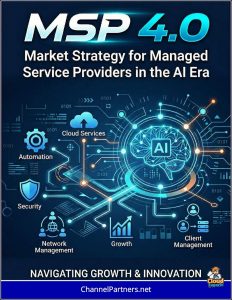 The traditional managed service provider model was built for a predictable world: monitor devices, patch systems, resolve tickets, and ensure uptime.
MSP 1.0 was break-fix. MSP 2.0 introduced recurring revenue through remote monitoring and management (RMM). MSP 3.0 added cloud migration, cybersecurity layers, and compliance support.
Each evolution improved efficiency and client retention, but all operated within the same fundamental paradigm—reactive or semi-proactive care for infrastructure.
MSP 4.0 shatters that paradigm. Artificial intelligence doesn’t just optimize existing services; it unlocks entirely new categories of managed services that were impossible or economically unviable before. In the AI era, MSPs shift from caretakers of technology to multipliers of business outcomes. Clients no longer pay primarily for systems that “don’t break.” They pay for intelligence that actively drives efficiency, revenue, risk reduction, and competitive advantage.
This chapter explores the transformative managed services now within reach. These offerings blend traditional MSP strengths—deep access to client environments, trust, and operational expertise—with AI’s ability to analyze vast datasets, predict events, automate complex decisions, and generate insights at scale.
1. Predictive and Self-Healing IT Operations (AIOps as a Managed Service)
Legacy monitoring alerted teams after problems occurred. AI-powered AIOps platforms ingest telemetry from networks, servers, applications, endpoints, and cloud workloads. Machine learning models correlate signals across thousands of data points to predict failures hours or days in advance.
New service: Managed Predictive Operations
- Proactive remediation: AI agents automatically right-size cloud resources, apply patches, reroute traffic, or spin up backup instances before downtime hits. Leading MSPs report 30-50% reductions in incidents and up to 70% faster ticket resolution through intelligent triage and auto-remediation.
- Self-healing environments: Systems detect anomalies (e.g., unusual CPU spikes or memory leaks), diagnose root causes, and resolve them autonomously in many cases, escalating only complex scenarios to human engineers.
- Outcome-based pricing: Instead of charging per device or ticket, MSPs can offer “guaranteed uptime SLAs with performance bonuses” tied to business metrics like reduced unplanned downtime or optimized infrastructure costs.
This moves MSPs from “keeping the lights on” to delivering measurable operational resilience—often with 15-25% gains in technician productivity as AI handles routine work.
2. AI-Augmented Cybersecurity – From Detection to Autonomous Defense
Cyber threats evolve faster than human teams can respond. AI changes the game by enabling continuous behavioral analysis rather than signature-based detection.
New services:
- Managed AI Threat Hunting and Autonomous Response: AI monitors user and entity behavior (UEBA) across the environment. It flags anomalies—like an employee suddenly accessing sensitive files at odd hours from a new location—and can isolate devices, revoke access, or apply dynamic policies in real time. Some platforms achieve predictive threat detection that stops attacks before they fully materialize.
- Intelligent Compliance and Risk Management: AI continuously scans for misconfigurations, data exposure risks, and regulatory gaps (GDPR, HIPAA, etc.), generating automated reports and remediation roadmaps. MSPs can bundle this as “Managed AI Security Posture Management.”
- Generative AI for Security Operations: AI assists in incident investigation by summarizing logs, suggesting playbooks, and even drafting response communications, dramatically reducing mean time to resolution (MTTR).
MSPs adopting these see AI-powered cybersecurity as one of the strongest new revenue streams, with many reporting it as a top opportunity for differentiation and premium pricing.
3. Intelligent Business Process Automation and Agentic AI Services
SMBs want AI but lack the expertise to deploy, integrate, govern, or maintain it safely. MSPs are perfectly positioned to offer Managed AI Operations (similar to MLOps but broader).
Key offerings:
- Agentic AI Workflows: Deploy autonomous AI agents that handle multi-step processes—such as invoice processing, lead qualification, inventory forecasting, or customer onboarding. These agents reason, use tools, and adapt without constant human oversight.
- Generative AI Integration and Governance: Help clients safely adopt tools like Microsoft Copilot or custom LLMs. Services include data readiness assessments, secure integration with existing systems, prompt engineering libraries, usage monitoring, and hallucination/risk controls. This includes “Managed AI Readiness” packages that prepare Microsoft 365 tenants, organize data, and enforce governance policies.
- Predictive Analytics as a Service: AI analyzes historical and real-time business data to forecast demand, identify upsell opportunities, optimize pricing, or predict customer churn. MSPs deliver dashboards and automated recommendations as part of a monthly retainer.
Early adopters have added significant annual recurring revenue (ARR) by helping clients automate repetitive tasks and redirect human effort toward higher-value work.
4. AI-Driven Cloud and Resource Optimization
Cloud sprawl and unpredictable costs plague many SMBs. AI excels at pattern recognition and optimization.
New service: Managed Intelligent Cloud Operations
- Continuous analysis of usage patterns to right-size instances, recommend reserved instances, or shift workloads for cost savings and performance.
- Predictive scaling that anticipates demand spikes (e.g., seasonal retail traffic) and adjusts resources proactively.
- Sustainability insights: Tracking carbon footprints of IT workloads and suggesting greener configurations.
This delivers direct ROI through lower cloud bills while maintaining—or improving—performance and reliability.
5. Strategic AI Advisory and Outcome Management
The highest-margin opportunity lies upstream: becoming the client’s AI Business Accelerator.
Offerings include:
- AI maturity assessments and customized roadmaps tailored to the client’s industry and size.
- Industry-specific AI solutions (e.g., predictive maintenance for manufacturers, personalized marketing automation for retailers, or intelligent scheduling for service businesses).
- Ongoing optimization: Monthly reviews where AI-generated insights inform business decisions, with the MSP acting as interpreter and implementer.
- Training and change management: Hands-on sessions, custom playbooks, and “AI Champions” programs to ensure adoption.
Clients increasingly view MSPs as the trusted partner who bridges the gap between AI hype and real business value—especially since over half of SMBs experimenting with AI rely on external experts for implementation and integration.
Why These Services Represent a Fundamental Shift
In the AI era, value moves from inputs (hours worked, devices managed) to outcomes (reduced costs, faster growth, lower risk, new capabilities). Traditional services become table stakes—often heavily automated internally by the MSP itself. The new managed services command premium pricing because they directly impact the client’s top and bottom lines.
Real-world results from forward-leaning MSPs already demonstrate the potential: significant productivity gains internally, new ARR from AI services, reduced ticket volumes, and deeper client relationships as strategic advisors rather than vendors.
However, success requires more than bolting AI tools onto old offerings. It demands:
- Strong data foundations and integration capabilities.
- Robust governance, security, and ethical AI practices.
- New skill sets in data science, prompt engineering, and business consulting.
- Transparent measurement of ROI to build trust.
The MSPs that thrive will treat AI as a production layer across their entire business—automating their own operations first to free capacity for these higher-value services.
Looking Ahead
Chapter 2 will examine how to reposition your brand and messaging to capture this new market without alienating existing clients. But the foundation is clear: the AI era doesn’t commoditize MSPs. It elevates them—if they seize the opportunity to offer services that were simply unimaginable a few short years ago.
Your clients are already asking how AI can transform their businesses. The question is whether you’ll be the partner who delivers those answers—or watches someone else step into that role.
The new managed services horizon is open. MSP 4.0 is about stepping boldly onto it.