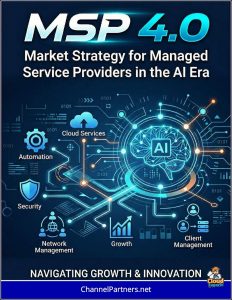
 In the rapidly evolving landscape of IT services, Managed Service Providers (MSPs) are entering a transformative phase often dubbed “MSP 4.0.”
This era builds on the foundations of previous iterations: MSP 1.0 focused on break-fix support, MSP 2.0 emphasized proactive monitoring and remote management, and MSP 3.0 integrated cloud services and cybersecurity.
Now, MSP 4.0 is defined by the integration of hyperscale AI—large-scale, cloud-based artificial intelligence systems capable of processing vast datasets and enabling autonomous operations.
Hyperscale AI, powered by platforms from providers like Microsoft Azure and AWS, is reshaping how MSPs deliver value, shifting from reactive service models to intelligent, predictive ecosystems.
This blueprint explores the pivotal role of MSP automation platforms, their seamless spanning of environments such as Microsoft 365 and Azure, and their evolution to support enterprise AI agent deployments. Drawing from industry trends, it provides actionable insights for MSPs to thrive in this AI-driven future.
The Evolution of MSPs: From Reactive to Intelligent
The journey to MSP 4.0 mirrors broader technological shifts, such as Industry 4.0 in manufacturing, where AI, IoT, and automation converge to create smart, interconnected systems. For MSPs, this means leveraging AI not just as a tool but as a core operational paradigm.
According to recent analyses, AI automation is enabling MSPs to monitor systems proactively, predict failures, and automate up to 80% of Tier 1 tickets, freeing human engineers for complex tasks. This evolution is driven by the need to handle hyperscale AI, where systems process petabytes of data in real time to support enterprise-scale deployments.
Key drivers include:
- Rising Client Demands: Businesses increasingly expect MSPs to manage not only IT infrastructure but also AI-driven insights for operational efficiency.
- Cost Pressures: Manual processes are unsustainable; AI automation can reduce operational costs by 20-30% through predictive analytics and self-healing systems.
- Talent Shortages: With skilled IT professionals in short supply, AI augments teams rather than replacing them, enhancing productivity and margins.
As one industry expert noted, “The future isn’t AI vs. humans. It’s AI + humans vs. the problem.”
The Core Role of MSP Automation Platforms
MSP automation platforms serve as the backbone of MSP 4.0, orchestrating workflows across disparate systems to deliver seamless, scalable services. These platforms automate routine tasks like ticketing, billing, and compliance monitoring, allowing MSPs to focus on strategic value-adds.
In the hyperscale AI era, they evolve from simple rule-based automation to intelligent systems incorporating machine learning (ML) and natural language processing (NLP). Essential features of modern MSP automation platforms include:
- Intelligent Ticketing and Resolution: AI-driven systems categorize tickets, suggest resolutions, and even auto-resolve issues using predictive analytics.
- Predictive Maintenance: By analyzing data patterns, platforms forecast potential disruptions, reducing downtime by up to 30%.
- Security Enhancements: Integration of AI for threat detection, anomaly identification, and automated remediation strengthens cybersecurity postures.
Platforms like Rewst and zofiQ exemplify this shift, moving from static scripts to AI agents that handle complex, conversational interactions. For MSPs, adopting these tools means transitioning from MSP to “Managed Intelligence Provider” (MIP), where services emphasize outcome-driven intelligence rather than mere management.
Spanning Microsoft 365 and Azure: Unified Multi-Environment Management
A hallmark of MSP 4.0 platforms is their ability to span hybrid environments, particularly Microsoft 365 (M365) and Azure. These ecosystems are central to enterprise operations, with M365 handling productivity and collaboration, and Azure providing scalable cloud infrastructure for AI workloads.
Key integrations enable:
- Seamless User Management: Platforms like Atria centralize management of Entra ID (formerly Azure AD), on-premises Active Directory, and M365, eliminating the need for multiple consoles.
- Billing and Subscription Automation: Tools such as Work 365 integrate with Microsoft Partner Center for automated invoicing, usage-based billing, and multi-tenant management, reducing errors and supporting complex models.
- Automation Workflows: Rewst and similar platforms automate M365 tasks like user provisioning, license management, and security compliance, syncing data with PSA tools like ConnectWise.
For hyperscale AI, Azure’s integration is crucial. It supports AI model training and deployment at scale, with MSP platforms like Jamcracker automating CSP tasks for M365 and Azure, simplifying multi-tenant operations. This unified approach ensures MSPs can manage hybrid setups—cloud-only, hybrid, or semi-hybrid—efficiently, with features like automated license procurement from partners like Pax8.
Evolving for Enterprise AI Agent Deployments
The pinnacle of MSP 4.0 is supporting enterprise AI agent deployments—autonomous “agents” that reason, adapt, and act without constant human oversight. Agentic AI represents a leap from reactive tools to proactive systems, transforming MSP operations and client services.
Evolution highlights:
- From RPA to Agentic AI: Early automation relied on robotic process automation (RPA) and professional services automation (PSA). Now, agentic AI handles dynamic tasks like real-time incident management and workflow orchestration, reducing cycles by 20-30%.
- Proactive ITSM: MSPs use AI agents for predictive support, auto-resolving tickets, and managing fleets of digital workers. By 2028, 33% of enterprise software may integrate agentic AI.
- Client Enablement: MSPs guide SMBs in deploying AI agents for tasks like campaign optimization or inventory management, with platforms like Shopify’s AI agents illustrating e-commerce applications.
Challenges include data privacy, integration complexities, and skill gaps, but opportunities abound: MSPs can offer AI workshops, governance, and deployment services, potentially contributing 11-50% of revenue. Tools like Acronis’ AI-infused RMM enable virtual agents for proactive issue resolution.
| Aspect | MSP 3.0 | MSP 4.0 |
|---|---|---|
| Focus | Cloud & Security Management | AI-Driven Intelligence & Agents |
| Automation | Rule-Based (RPA/PSA) | Agentic AI (Autonomous, Adaptive) |
| Environments | Siloed (M365 or Azure) | Unified (Multi-Tenant Integration) |
| Outcomes | Reactive Fixes | Predictive, Outcome-Driven Services |
| Revenue Impact | Cost Savings (10-20%) | Efficiency Gains (20-30%) + New Streams |
Challenges and Strategic Recommendations
While promising, MSP 4.0 adoption faces hurdles like AI governance, ethical concerns, and integration with legacy systems. To navigate:
- Start Small: Pilot AI agents in internal operations before client rollouts.
- Build Expertise: Invest in training for agentic AI, partnering with vendors like Microsoft for certifications.
- Emphasize Security: Use AI for enhanced threat detection, ensuring compliance in hyperscale deployments.
- Client Education: Offer AI strategy guides for SMBs, positioning your MSP as a MIP.
Conclusion: Embracing the AI Imperative
MSP 4.0 is not optional—it’s essential for survival in the hyperscale AI era. By leveraging automation platforms that span M365 and Azure, and evolving to support AI agent deployments, MSPs can transition from service providers to intelligence partners.
This blueprint equips MSPs to deliver proactive, scalable solutions, unlocking new revenue while enhancing client outcomes. As AI continues to mature, those who act decisively will lead the pack, turning technological disruption into opportunity.